A decade ahead of the ADU boom.
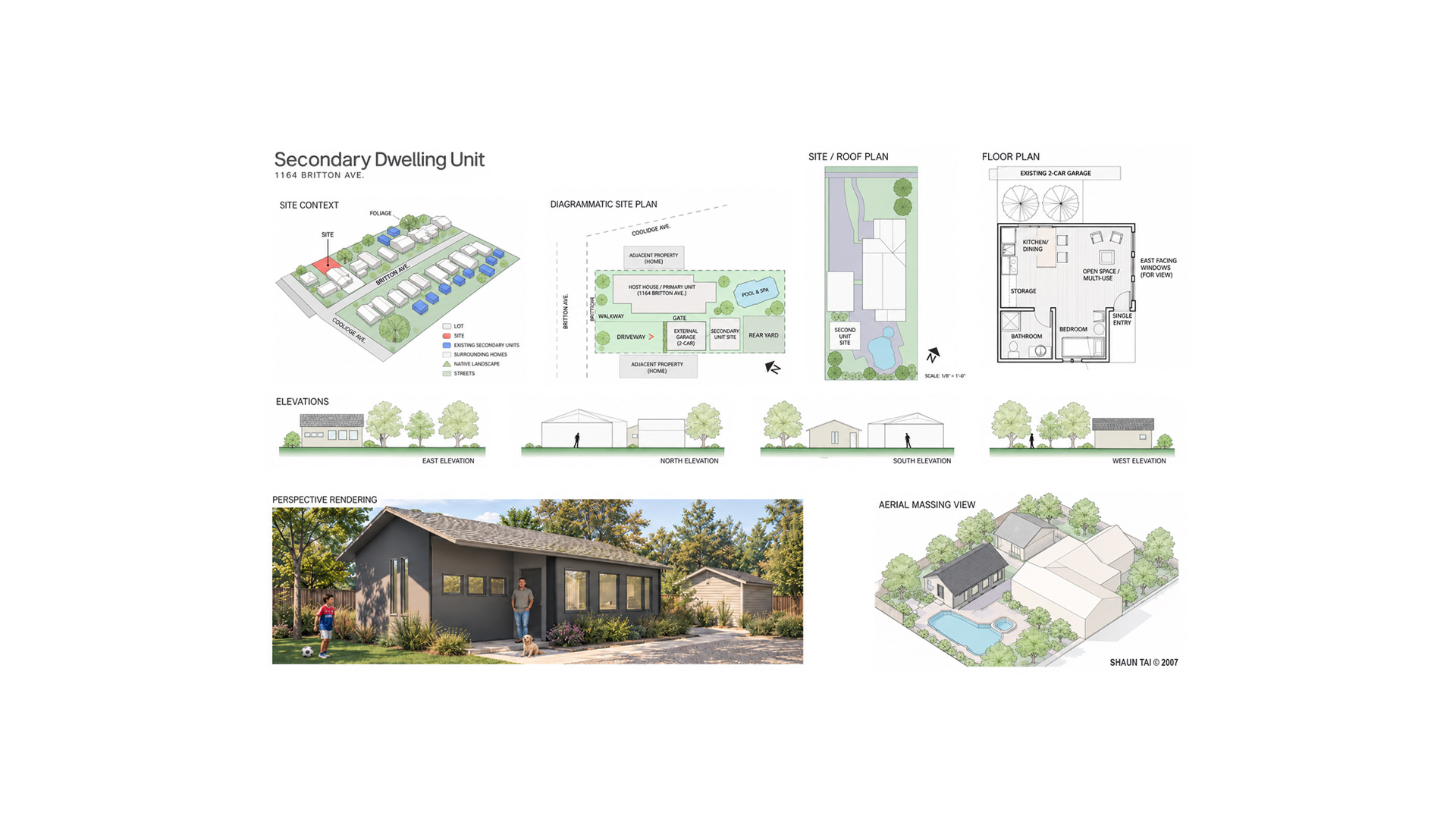
In 2007, San José approved just 100 second-unit permits through a pilot program. For his master’s thesis at San José State University, Shaun Tai studied how greener backyard homes could expand housing options while sharply reducing operating costs. Working with McCall Design Group, he developed three designs for a real Willow Glen property and had them priced by a Bay Area builder. The research showed that modest changes to local rules and building standards could reduce annual operating costs by more than 90 percent. The thesis led to Tai earning his master’s degree in Architectural and Urban Design and is available through SJSU ScholarWorks.
2006–2007
- Designer · Researcher · Policy Author
Every backyard can be part of the answer.In 2007, it was still a radical idea.Today, it is California housing policy.
Our future, drawn to scale.
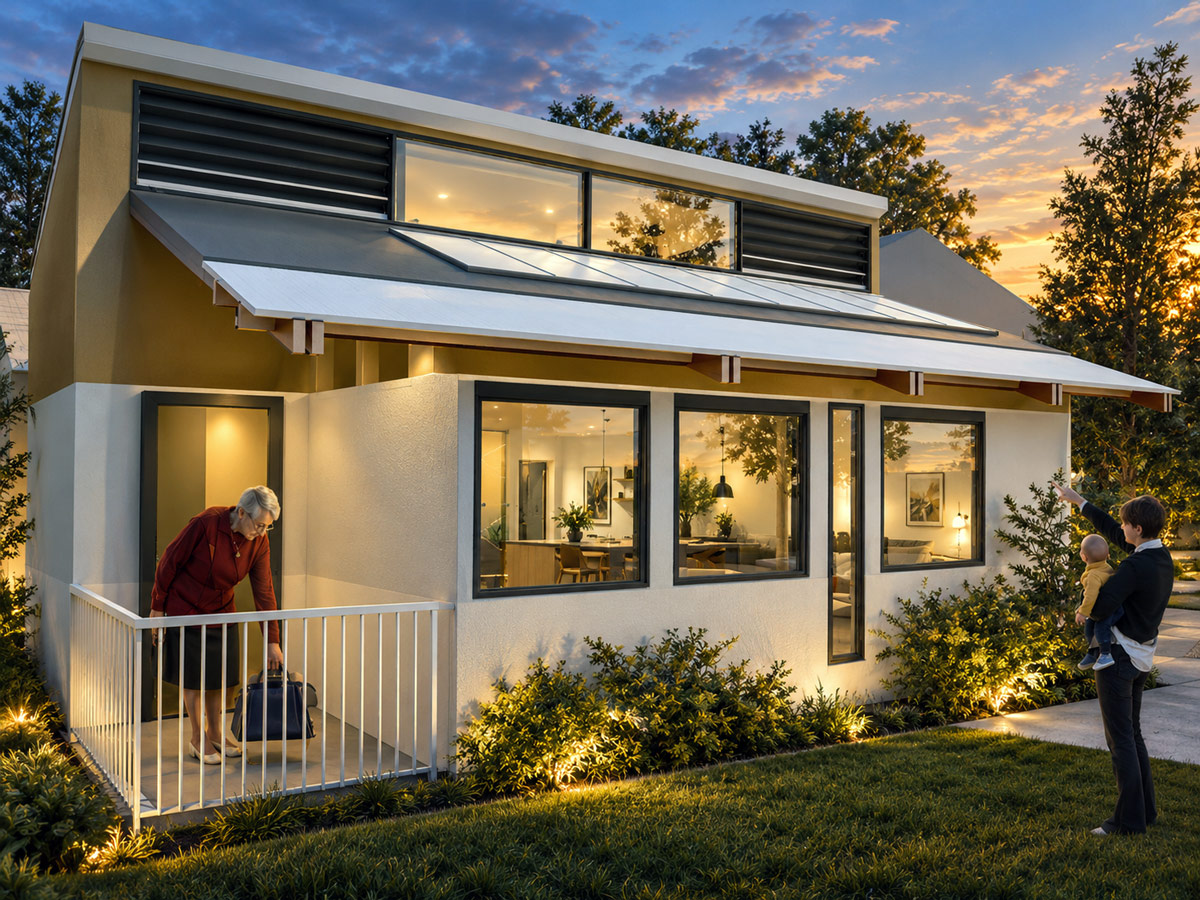
The thesis rested on ideas that now shape how California builds. Small homes can help ease a housing shortage without consuming new land. Working with the sun through orientation, shading, and daylight lowers energy use for decades. One backyard home can support a grandparent, a college student, or a young worker beginning a career. And good policy can make the better choice the easier one. None of these ideas was new on its own, but in 2007, accessory dwelling units still faced steep local barriers, and rooftop solar was an incentive, not a mandate. Today, state law requires cities and counties to allow backyard homes on most residential lots, and new houses must include solar, with limited exceptions. What set the thesis apart was weaving these threads into a single proposal. That integration would come to define Shaun Tai’s work: bring people, buildings, and policy into the same conversation, then design for what communities will need next. It was an early glimpse of a way of thinking that is human first, systems-minded, and always looking ahead.